Sydney to Brisbane in a campervan: the Pacific Highway, honestly
How the Pacific Highway run from Sydney to Brisbane actually works in a campervan: which towns to sleep in, what the upgrade changed, and one-way hire.
Updated 7 November 2026 · 5 min read

The Pacific Highway is the least dramatic great drive in Australia, and that is the point. It is dual carriageway almost the whole way, there is a service centre roughly every hour, and the only real decision is whether to sleep at Port Macquarie or push on to Coffs Harbour. It is also about 1,000 kilometres, which is far enough that the difference between a good trip and a bad one is entirely in how you break it up.
This is a guide to the drive as a campervan trip rather than a sprint: what the road is like now that the upgrade is finished, which towns are worth a night, and how the whole thing works if you collect the van in Sydney and hand it back in Brisbane.
How far it is, and why that number is misleading
Tourism Australia puts the Sydney to Brisbane drive at 1,000 kilometres on what it calls the Legendary Pacific Coast route, a figure that includes the detours inland to the Hunter and out to the beaches. Transport for NSW, which built the highway, records that the upgrade has cut travel time along it by about two and a half hours. Put those together and you get the shape of the trip: a long distance that no longer feels like one.
Almost all of it is now four-lane divided road. Transport for NSW's own account of the program describes almost 660 kilometres of dual carriageway between Hexham, north of Newcastle, and the Queensland border, built with about 600 bridges and more than 30 towns and villages bypassed. For a campervan driver that means no more crawling down the main street of Kempsey or Macksville at 50 km/h behind a caravan; you are on motorway-standard road with the towns sitting quietly off to one side. The other thing 660 kilometres of divided road buys you is consistency: the same speed, the same sight lines, the same service centre layout, town after town, which is relaxing for the first three hours and hypnotic by the sixth.
The four breaks that make sense
Two nights is the minimum that still feels like a holiday. Three is better, and gives you a full day somewhere in the middle instead of two half-days at either end.
The natural sequence is Hunter Valley, Port Macquarie, then either Coffs Harbour or Byron Bay. Tourism Australia's version of the route spends its second day in the vineyards and its third around Port Stephens, which tells you something about how much there is to distract you in the first 200 kilometres.
| Stop | What it is for | What to know |
|---|---|---|
| Hunter Valley | Wine, and a first night that is not a highway town | Inland detour off the highway, about two and a half hours from Sydney |
| Port Macquarie | The proper halfway break | River mouth, koala hospital, and enough space to park a van without a fight |
| Coffs Harbour | Supplies and a last coastal stop | The 14-kilometre bypass is still under construction, so you drive through town |
| Byron Bay | The beach finish | Slower last leg into Brisbane; worth it if the surf is the point of the trip |
What the upgrade actually changed
The final link, Woolgoolga to Ballina, opened as 155 kilometres of motorway-standard road and took the highway around South Grafton, Ulmarra, Woodburn, Broadwater and Wardell. North of there, the Port Macquarie to Coffs Harbour section bypassed Kempsey, Macksville and Urunga and is credited by Transport for NSW with saving more than 30 minutes between the two towns.
The trade-off is worth understanding before you drive it. Towns that used to be unavoidable are now a short exit and a few minutes off the highway, which is good for them and mildly annoying for you if you were counting on the bakery you remember. It also means the drive has fewer natural pauses, and fatigue becomes the main hazard rather than traffic.
Doing it as a one-way hire
This is one of the few Australian drives where a one-way hire genuinely improves the trip. Pick up in Sydney, drop off in Brisbane, and the highway becomes the spine of a holiday rather than a loop you have to retrace. The alternative, returning to Sydney, adds a thousand kilometres of driving you have already seen. The trip finishes at campervan hire in Brisbane is where the trip ends, and the airport is close enough that a morning drop-off still leaves you a full day.
Choose both cities when you search, because the pickup and drop-off are set together. If you are doing the run in two or three days, a hi-top campervan is the sensible pick: you can stand up to change clothes, and you are not unfolding a roof every night for the sake of two sleeps.
Book the van through campervan hire in Sydney and plan on collecting it early. Getting out of Sydney before the morning peak is worth more than any shortcut further north, and the first 100 kilometres of the drive are the least interesting of the whole route.
The last stretch into Queensland
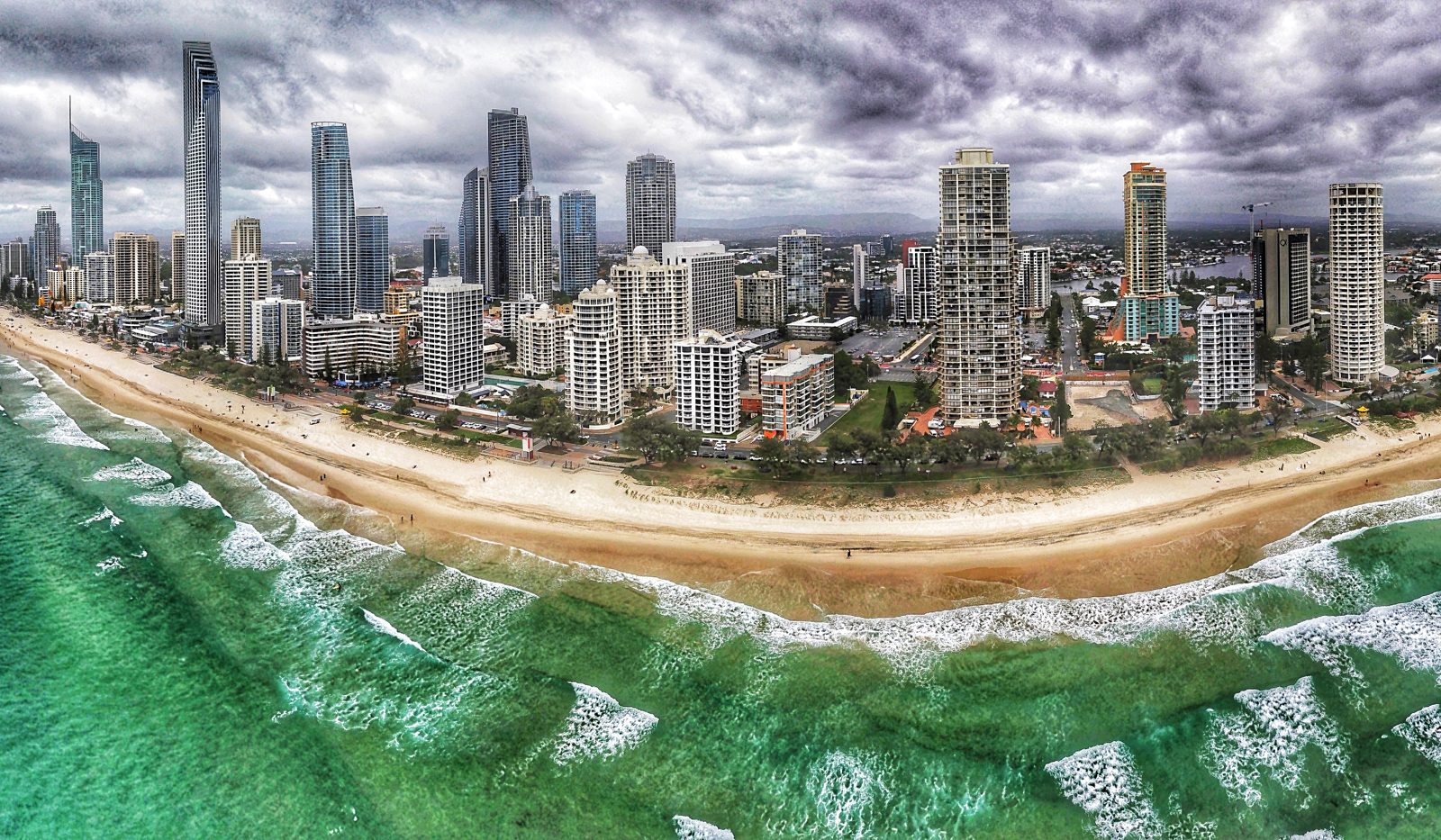
Ballina is the point where the drive stops being about the highway and starts being about arrival. The road swings inland around the Richmond River, Byron Bay is a short detour east, and from there it is the Tweed, the border and the Gold Coast in quick succession.
This is the busiest part of the route and the part where a campervan is least fun: multi-lane traffic, holidaymakers, and a lot of people making late decisions about exits. If you are finishing in Brisbane, aim to cross the border outside the afternoon peak, and treat the last hundred kilometres as a separate task rather than an afterthought to a long day.
It is also the stretch with the best reward. The Gold Coast beaches run for kilometres and the hinterland behind them is genuinely worth a night if you have one spare.
Questions people ask before booking
Most of the planning for this drive happens before you leave: how many nights, which direction, and whether the van goes back where it came from. Those three choices decide everything else, including which towns you should be booking.
The answers below assume you are driving north in a campervan and want to see something rather than simply arrive. If you are on a deadline, the honest advice is to fly and hire at the other end.
- Can you drive Sydney to Brisbane in one day?
- You can, and people do, but you arrive with nothing left for the next day. The highway is dual carriageway throughout, so it is monotonous rather than difficult. Two days with one night in Port Macquarie or Coffs Harbour is the version most people actually enjoy, and three days lets you stop somewhere properly.
- Is the Pacific Highway suitable for a first campervan trip?
- It is the gentlest introduction to Australian highway driving there is: divided road, frequent service centres, no unsealed sections and no need to plan fuel. The hazards are fatigue, holiday traffic around the Coffs and Ballina exits, and the temptation to treat a 1,000-kilometre road as a one-day run.
- Which direction is better?
- Northbound, from Sydney, puts the coast on your left and the afternoon sun behind you, and it ends in Brisbane where the airport is close to the drop-off. Southbound works just as well if you are flying into Queensland first.
Sources
Pick a depot for this trip
Every guide here starts at one of the eleven depots. The location pages carry the address, the hours and what is worth driving to first.