A Tasmanian campervan loop from Hobart, with the numbers attached
A realistic Hobart loop around Tasmania by campervan: verified leg distances and drive times, the ferry question, and what to cut when time is short.
Updated 7 November 2026 · 6 min read
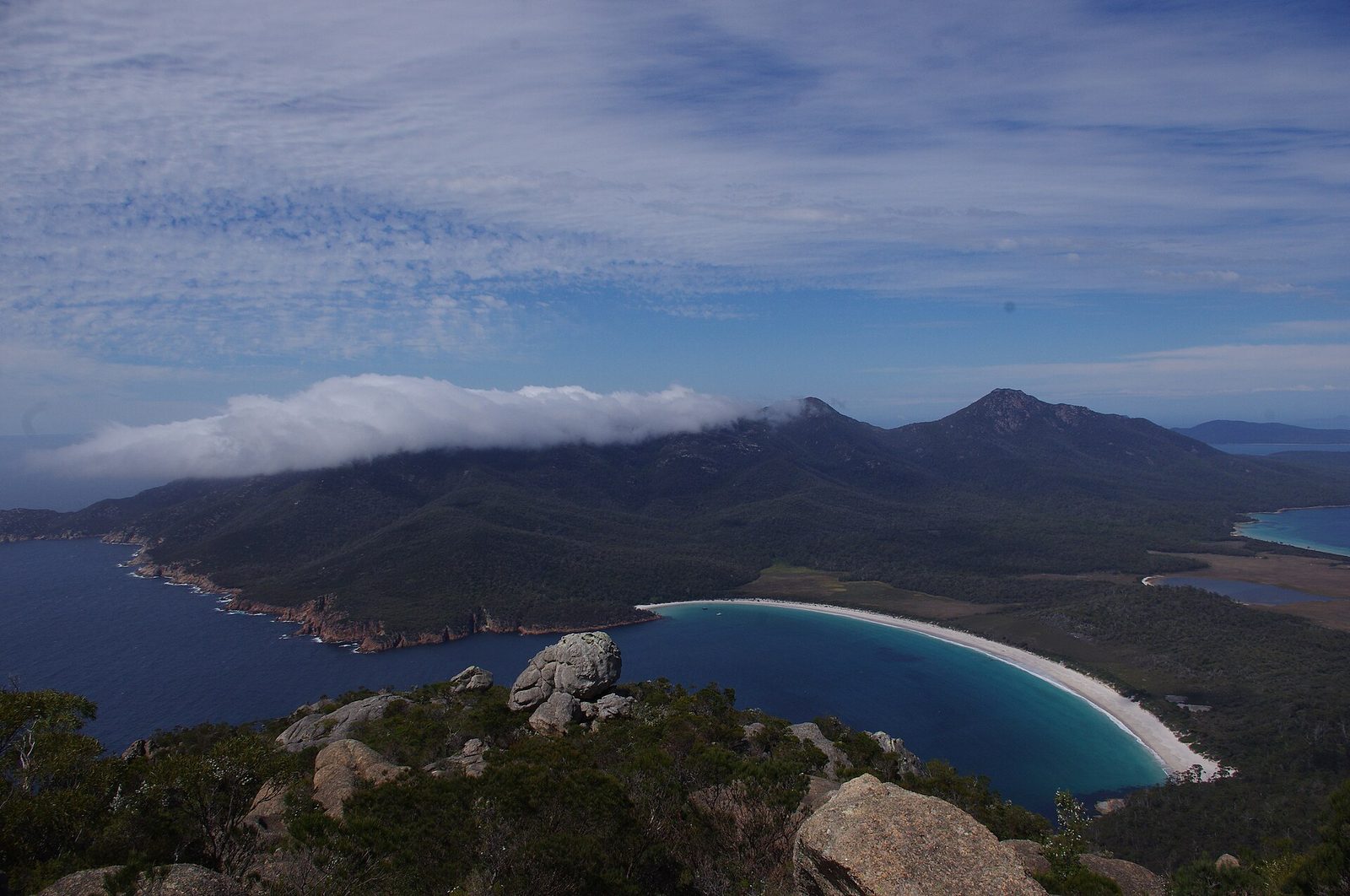

Tasmania looks small on a map of Australia and behaves like a much larger place once you are on the road. The island's own tourism body describes a full lap as 1,909 kilometres including the standard detours, or 1,220 kilometres if you drive the loop and skip them. That gap is the whole planning problem in one number: the detours are most of what you came for, and they are also most of the driving.
This is a loop that starts and finishes in Hobart, runs up the east coast, crosses the north and comes back down the west. It is the version that suits a campervan, because it puts the long empty stretches at the end of the day rather than the start.
The loop, leg by leg
These are the figures published by Discover Tasmania for its lap of the map, rearranged to start and finish in Hobart. The drive times are theirs, and they are honest ones — Tasmanian roads are slower than the distances suggest.
The two totals at the bottom are the ones to argue with yourself about. The difference between them, almost 700 kilometres, is the price of the detours — and it is roughly two extra days of driving if you want to do them properly rather than photograph them from a car park.
| Leg | Distance | Drive time |
|---|---|---|
| Hobart to St Helens (east coast) | 309 km | 4 hours |
| St Helens to Devonport | 259 km | 7 hours |
| Devonport to Strahan | 304 km | 3.5 hours |
| Strahan to Hobart | 348 km | 5 hours |
| Whole loop, no detours | 1,220 km | — |
| Whole loop with standard detours | 1,909 km | — |
Why that St Helens to Devonport line matters
Look at it again: 259 kilometres taking seven hours. That is not a typo and it is not a warning about the road surface, which is sealed and good. It is what happens when a highway threads through the north-east highlands and the Bay of Fires, and it is the single best argument for not over-planning this island.
The east coast is the part people underestimate in the other direction. Hobart to St Helens is 309 kilometres in four hours, which is a genuinely easy day, and it passes through some of the best coastal country in the country: the Tasman Peninsula turnoff, Orford, Swansea, Coles Bay and Freycinet.
A workable shape is three nights on the east coast, two in the north, two on the west, and a night in Hobart at each end. That is nine nights for 1,220 kilometres, which leaves room for the detours without turning the trip into a driving exercise.
The ferry question
If you are bringing your own vehicle, the Spirit of Tasmania sails between Geelong in Victoria and Devonport, with overnight crossings, according to Discover Tasmania. That is the only way to drive your own van onto the island, and it lands you in the north-west rather than at Hobart, which changes the shape of the loop.
If you are hiring, the ferry is irrelevant and that is a genuine advantage. Collecting in Hobart means the loop starts at your accommodation rather than at a port, and you are not paying to ship a vehicle across Bass Strait twice.
Devonport is a one-hour-fifteen-minute drive west of Launceston, 101 kilometres, and an hour from Cradle Mountain National Park at 83 kilometres, per the same source. If you do arrive by ferry, that geography is worth using: Cradle Mountain first, then south down the west coast, is a better opening than driving straight across to Hobart.
What to skip when you only have five days
Five days is enough for a good Tasmanian trip and not enough for this loop. The honest move is to cut the west coast entirely and do Hobart, the east coast and the north, which gives you the Freycinet peninsula, the Bay of Fires and Launceston without a single seven-hour day.
If you are keeping the full loop, these are the detours to weigh, with the figures Discover Tasmania publishes for each:
- Turrakana / Tasman Peninsula — 132 km return, 2 hours. Port Arthur and the sea cliffs; the easiest detour to justify.
- Stanley — 157 km return, 2 hours. The Nut, and the prettiest town on the north-west coast.
- Tamar Valley — 100 km return, 1 hour. Wineries, and the cheapest detour in driving terms.
- Cockle Creek — 300 km return, 4 hours. The southernmost point you can drive to, and the first thing to cut if the schedule is tight.
Parks passes, and where they bite
A valid parks pass is required for entry to all of Tasmania's national parks, per the Tasmanian Parks and Wildlife Service. For a campervan the relevant product is the holiday pass, which covers all national parks for up to two months at $98.35 per vehicle, up to eight people. A daily pass is $49.15 per vehicle, so the holiday pass pays for itself on the second day.
Two exclusions are worth knowing. The Cradle Mountain shuttle bus is not included in the holiday pass, and additional fees apply for things like guided cave tours, multi-day walks and campground stays. Budget for those separately rather than being surprised at a booth.
Buy the pass before you arrive at the first park. Doing it online takes a few minutes and saves the awkward conversation at a self-registration station with a queue behind you.
Driving notes that actually matter
Wildlife is the real hazard. Dawn and dusk on any rural Tasmanian road involve wallabies, possums and the occasional wombat, and a wombat will do serious damage to a campervan at speed. Plan to be off the road before dark, or accept that you will be driving slowly.
The roads are narrow and winding in a way that mainland drivers underestimate, particularly on the west coast between Strahan and Hobart. Seven hours for 259 kilometres is the honest number; treat any itinerary that assumes otherwise as fiction.
Fill up in the towns. Fuel is available on the main routes but the gaps are real on the west coast, and a campervan with a long-range tank is a different proposition from one without.
Collect in campervan hire in Hobart and the Tasman Peninsula is a two-hour return detour from the city, which makes it a realistic first afternoon. For the first night, Hobart trip ideas covers the waterfront, MONA and the drive up Mount Wellington, which is the correct way to start a loop that ends back where it began. If you are travelling as a couple and want something that fits a normal car park, the budget mini camper is the right size for Tasmanian roads.
Questions people ask before booking
Tasmania generates more planning anxiety than any Australian destination of its size, mostly because the distances look small on a map and the drive times do not.
These are the two questions that come up most often, answered with the figures above rather than with optimism.
- Do you need to book campsites in Tasmania?
- In summer, on the east coast, yes. Freycinet and the Bay of Fires fill up, and the holiday parks in St Helens and Bicheno are busy from December. Outside January the pressure drops sharply and you can be much more casual.
- Is the loop doable in a two-wheel drive campervan?
- Yes. Every leg of this loop is sealed highway, and the detours listed are on sealed roads. The unsealed roads in Tasmania are the ones heading into the remote parks and the west coast forests, and none of them are required for this itinerary.
Sources
Pick a depot for this trip
Every guide here starts at one of the eleven depots. The location pages carry the address, the hours and what is worth driving to first.